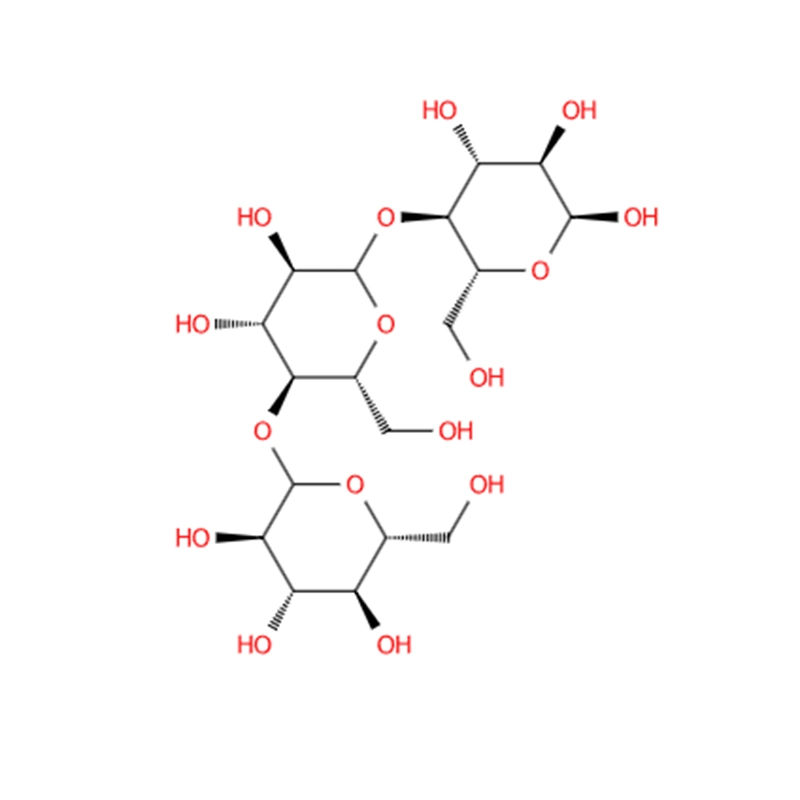
Products Description of Dextrin CAS#9004-53-9
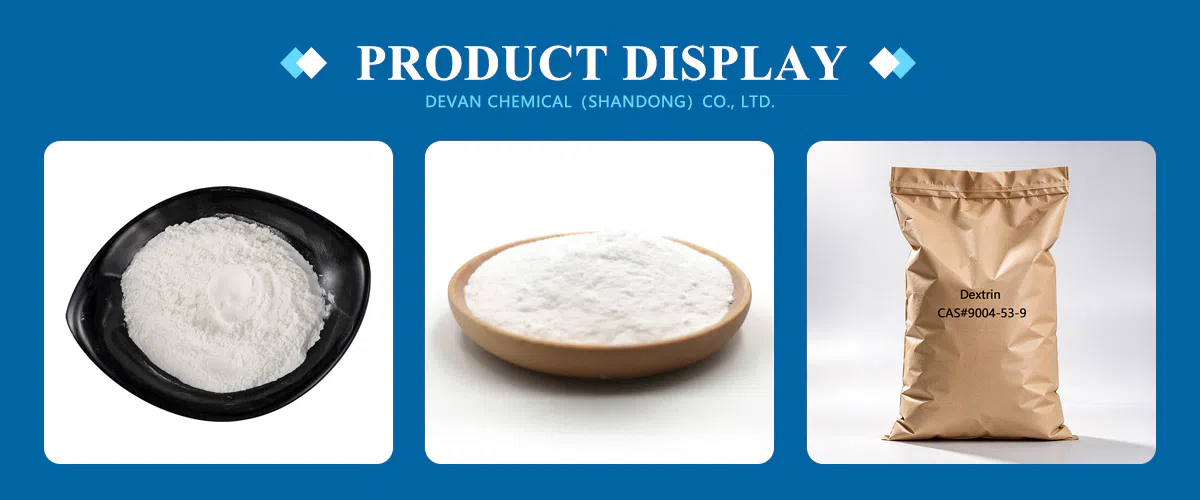
Dextrin, also known as starch gum, is a polysaccharide obtained by partial hydrolysis of starch. It appears as white to pale yellow fine powder, including white dextrin, yellow dextrin and British gum types. It is easily soluble in hot water and forms a stable colloidal solution, while insoluble in ethanol and other organic solvents. It has low viscosity, good film-forming ability and adhesive property. It can be supplied in food grade, pharmaceutical grade and industrial grade with stable quality.
It is a biodegradable raw material with neutral taste and good compatibility with most water-based ingredients. Different specifications are available to meet the requirements of binders, thickeners and carriers in diverse industries.
Dextrin Chemical Properties
| Melting point | 53.75-54 °C |
| density | 0.8 g/cm3 |
| storage temp. | Store at RT. |
| solubility | H2O: 0.1 g/mL hot, complete, yellow to very deep yellow |
| form | powder |
| color | white to pale yellow or claybank |
| Odor | odorless |
| Water Solubility | Soluble in hot water (0.1 g/ml). |
| Sensitive | Hygroscopic |
| Merck | 142953 |
| Dielectric constant | 2.2(Ambient) |
| Stability: | Stable. Combustible. Incompatible with strong oxidizing agents. |
| InChIKey | FYGDTMLNYKFZSV-MRCIVHHJSA-N |
| SMILES | O1[C@H](CO)[C@@H](O)[C@H](O)[C@@H] (O) C1OC1[C@H](O)[C@@H](O)C(O[C@H]2[C@H] (P) (O)[C@@H](O)[C@@H](O)O[C@@H]2CO)O (Q) [C@@H]1CO |&1:1,4,6,8,13,15,19,20,22,24,27,31,r| |
| LogP | -4.673 (est) |
| EPA Substance Registry System | Dextrin (9004-53-9) |
| Safety Statements | 24/25 |
| WGK Germany | 1 |
| RTECS | HH9450000 |
| F | 3 |
| TSCA | Yes |
| HS Code | 35051000 |

Product Application of Dextrin CAS#9004-53-9
Dextrin serves broadly as an adhesive material across multiple industries such as pharmaceuticals, food manufacturing, papermaking, metal casting, wallpaper, labels, stamps and adhesive tapes.
If deployed as a binder for tablets, it needs to feature fast drying capacity, uniform spread, rapid adhesion and solubility under humid environments. White dextrin or low-viscosity yellow dextrin are generally chosen for this scenario. Adhesives for labels and stamps demand high viscosity and robust film toughness, whereby white dextrin or British gum represent appropriate options. Moreover, dextrin can be utilized as printing thickener within textile printing and dyeing procedures.